Monday, May 6, 2013

Floods, bacon and Easter chicks

Having just looked back at the last post we realised how much has happened since lambing at the start of the year!

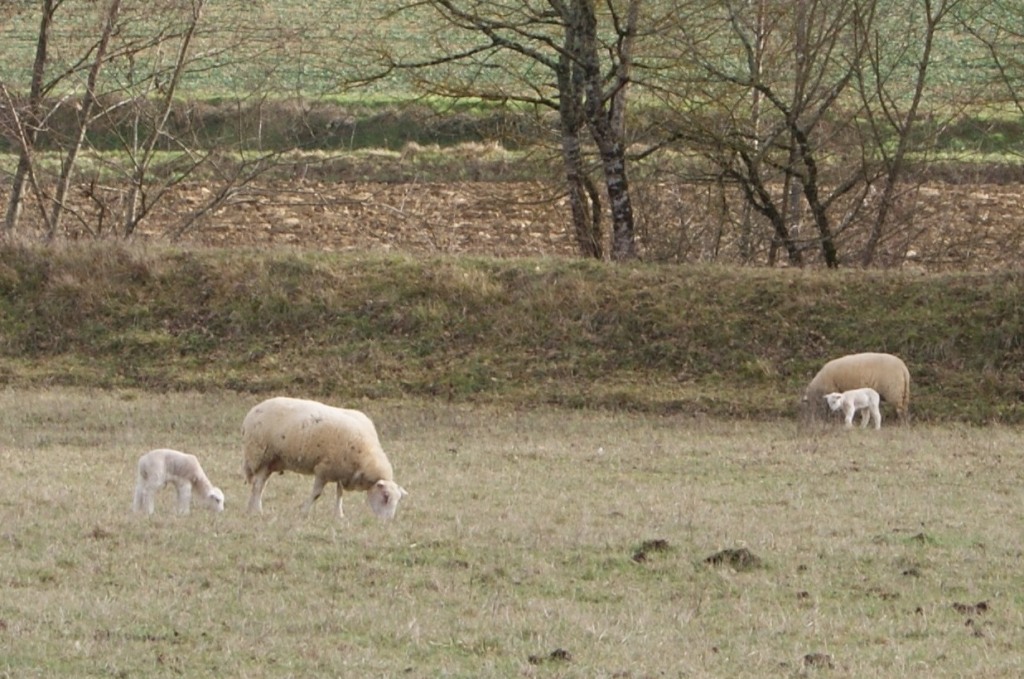
A fortnight after the lambs were all born this area saw the worst flooding in years. We awoke to discover the canal water was almost brimming over at the front of the house and the bridge accessing the sheep/donkey field at the back under 1 metre of water from river water backing up to the mill. The pig pen was a swamp and the river was rising steadily against the dyke. Um, right. Initiate action-plan. Except no action-plan existed. The kids and cats were hustled upstairs with pain au chocolats and a film to watch. The sluice gates were cranked fully open . All electric fences were turned off (the chickens could fly to higher ground if necessary). Then the troops arrived - neighbours with trailers and tractors helped bundle the sheep and new born lambs and transported them to a hastily-made barn enclosure (on a hilltop!) and the black piglets were taken to another high-altitude neighbour with an old unused pigsty.

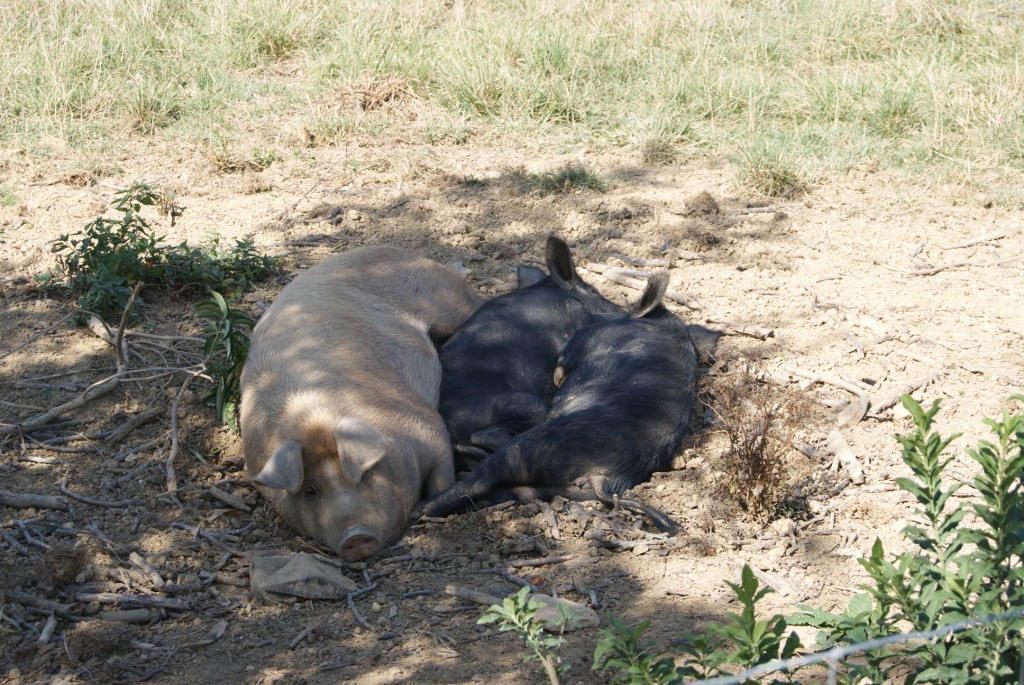
Rosie the sow refused to abandon ship so she was made a raised platform in the shelter and she wallowed around quite happily in her bog. A few sheep and the donkeys also refused refugee status and kept to the high banks of the field. Cooper the border collie seemed a bit bewildered by the disappearance of half the herd.

The veg patch was a sorry sight - the ditches bordering the field overflowed and the leftover drip-irrigation pipes floated across the field towards the pig pen. Fortunately we had only onions, leeks and brassicas in the ground which mostly survived their dunking. The polytunnel looked like an outdoor pool cover...

We realise now we didn't take a single photo during the flooding as we spent our whole waking day watching over the animals and raising materials to higher ground. It would have also been quite tricky holding a camera with fingers crossed hoping the water level wouldn't rise any more!

We had one more night of fearing the mill would flood (and had to wake hourly to check the level) but after 5 weeks of very very wet weather and water-logged land all the sheep returned home and we could finally start drying the place out. We danced a little jig the 1st day we could venture outside in trainers rather than wellies!

The 2 black piglets refuging in our neighbours pigsty, who had reached slaughter-weight, were "transformed" into hams, bacon, joints, sausages and pate under the watchful eye of our neighbour and a couple of friends who came to help out. The piglets had run amok during their stay with us and definitely had some wild boar genes within. We had managed to tame them to a degree but their penchant for chewing wellies (whilst attached to human feet) had gone beyond amusement as well as their constant escape attempts. We learnt (another) valuable lesson - don't keep pigs separated from their mothers too early - they don't respect electric fencing nor the hand that feeds them!

Whilst considering a worming programme for the sheep and donkeys in February a very simple and obvious treatment occurred to us (after a suggestion from a neighbour of course) - let the chickens sort it out. The 8 hens and cockerel (who had been swapped to avoid cross-breeding) were in a coop with a large run. We built a portable ark and placed it beyond the fence at the bottom of the garden. The principle criteria for this new ark was that we could lift between the 2 of us so it could be moved from field to field following the sheep and donkeys. At each stage of construction we had to try and lift it. Grunting and knee bending became more marked as the ark took shape but we got there! After a couple of days the hens were laying in the ark (or in the donkey shelter if a queue formed in the nesting area!)


The chickens now dutifully follow the sheep and donkeys around their field all day enjoying the parasites "deposited" for them. Nice thought. They now require less grain too so they are now completely free-range and organic (as the grain comes from an organic neighbour). Happy hens, happy sheep and donkeys and happy us. Job done.

Liberating the coop and run got us thinking about chickens for meat. Our hens don't seem to get broody very often so we have very few chicks born each year. We decided to give nature a hand so borrowed an incubator and heat lamp from a friend and chose likely candidates from the egg collection basket..... After diligently turning the eggs regularly and monitoring the temperature and humidity we were rewarded after 21 days with 5 chicks. In the photo below the first chick has hatched. The "S" on the eggs is for turning the egg in the "soir" - the other side of the egg had "M" for "matin" so we knew when the eggs had last been turned. Turning the eggs during incubation mimics a broody hen's behaviour of turning the eggs in her nest to keep them humid and prevent the yolk from sticking to the inside wall of the shell.


The chicks went under the heat lamp in the boiler room for a few more days then were relocated to the old pigsty till a few weeks old. They are very fluffy for a couple of days then start sprouting their adult feathers and look a little scraggy. They are completely tame as have had no mother to show them what to fear. As a result they happily sit in our hands and peck at Bee's sparkly engagement ring or perch on the kids' arms. On the flip side they are easy prey for buzzards, rats and weasels but they have been now let into the run so fingers crossed. The chicks at a few days old:

 
This chick was born 48 hours after the others and was pecked and bullied so was isolated for a while - please note clean fingernails  - doesn't happen all that often these days!


We may let this little bunch of fluffy chicks join our egg-layers or we may put them in the freezer at 4 months. TBC.

We gave nature another hand last week when we got bored of seeing the resident ducks abandon their ducklings all over the place. We have been netting lone ducklings forlornly paddling up and down the canal whilst their mums have been waddling around blissfully ignorant they are a few ducklings short. We even found one in the polytunnel cowering in the coriander. In this photo the ducklings are under 1 week old and under the heat lamp in the boiler room.


We hurriedly cleaned out another stall in the pigsty to house the ducklings (in keeping with unearthing past treasures we gained a sun-lounger, silver pocket watch, serving dish, knitting needles, sunglasses and as always; a pair of old slippers). We now have 9 ducklings from 4 different mothers in our care.  Magret de canard? Perhaps not but they must be slaughtered at 10 weeks old if they are to go in the freezer as apparently they are a right pain in the pitchfork to pluck after this age!

Although they are the greediest, messiest eaters we have ever seen (barring our children at the weaning stage) just seeing the ducks enjoying the lake and canal (and stealing our supply of chicken grain) is a great pleasure so we will decide their fate in a few weeks - if we can clip their wings before they fly away....in the meantime they are currently sharing their run with the chicks and loving their swimming pool courtesy of a friend happy to see a disused paddling pool go to a good home.


Winter is also time of tree-felling to collect enough firewood for the next season. A couple of huge poplars, some acacias way too close to the house and various other ash and willows were chain-sawed and pulled over using the tractor.... and we now have enough wood for next winter - we hope - all stacked neatly at the end of the barn to dry out. The aim was to cut down all the enormous trees over the next few years so we can then just cut down more manageable ones after that. We were offered the use of neighbourly muscle (yet again) and a hydraulic wood splitter this year which made swift work of the 50cm tree trunks - and probably saved a couple of weeks hard labour. The poplar (photo below taken last July) was a beast that towered over our scarecrow - and the electricity cables beyond - so was felled this spring.


It and other trees are destined for the fabrication of the planned donkey/sheep shelter that is to be constructed  - on higher ground to foil future flooding - and larger to accommodate our growing flock of sheep.  We have already divided the grazing into 3 fenced fields  - the sheep and donkeys will be rotated to ensure they don't get too much fresh pasture at any one time and allow the grass to grow enough to cut hay for the winter. We have admitted defeat with electric fencing for the sheep as they have neither respect nor fear for it. Fence posts were sunk with a manual post-rammer and sheep fencing stretched across it using the tractor to add tension. A lesson was learnt last summer trying to use the post-rammer in "concrete" clay earth so at the least the sodden ground worked in our favour for once even if we were post-ramming in snow-showers one day and hot spring weather the next.

We currently have a resting pig enclosure - Rosie the soppy sow has gone to find "true love" (as we told the kids) ie she has returned to her former owner to mate with a boar. She was always earmarked as a breeder and now the black piglets are bacon it seemed the perfect time for her to have piglets in peace. Gestation is 3 months, 3 weeks and 3 days so excepting Bank Holidays (they respect them as days of rest?!) she will return to us in a month and be expecting sometime in August. We can't imagine her any bigger than she already is - she weighs in at approx 180kg and her kisses are somewhat heavy handed on the kneecap but we are missing her and the pig bucket enormously.

It is now 4 months since starting this post  - from January flooding to May planting is a huge expanse in seasons. We have just today finished the main spring planting; potatoes, onions/leeks/garlic, tomatoes, butternuts, peas, beans, brassicas, fodder beet & peas, sunflowers and a swathe of other random root and legumes. We have planted a bit of everything to see what germinates a this time last year we hadn't got the polytunnel erected so hopefully this year we are slightly ahead even if the temperatures have been lower and the rainfall greater than in 2012. We are awaiting the wheat and field bean harvest and will soon start cutting hay from the grass fields. This year we are attempting to cut and bale it ourselves - cue Al to acquire lots of random and rusty farm machinery, add huge quantities of grease, buy a few new bolts and pray for long periods of dry weather.

 
And here is our new arrival:
 

Only joking but it got us thinking for the future.......


The mill room renovation

Oops just realised that we never published this post - it has sat quietly in drafts since January!!!! Well here it is now....

Wow, don't fall over but this is another blog post within a week.  I guess it is the dreadful weather we are having that has driven us indoors so we are catching up on jobs.

In the Autumn, we started work on the mill room; we were in desperate need of a second living space as the kitchen was starting to feel small what with the dining table, dresser and a sofa in there and no other rooms except bedrooms.  We have another room to develop - the room we call the threshing room (in reality it is a winnowing room) which lies beyond the mill room and together they formed the "industrial" part of the building as oppose to the living accommodation.

These are the before photos albeit with the electrical conduits in place and new windows;


During Winter 2011/12 we had already replaced the suspended floor in the mill room; this is the floor that spans the mill wheel area under the mill where the drive is created to turn the enormous mill stones.  The previous floor was constructed from seriously heavy oak beams laid flat onto two veritable tree trunks set into the stone walls. Unfortunately they were in part rotten with gaping holes and no insulation from the flowing water below. Once they were removed we added further treated pine beams set into the walls and linked them together with cross beams to create a solid grid of beams.  Onto this, we laid boarding with insulation and a vapour barrier.  The other prep work was knocking down a wall that had previous housed part of the bathroom that we renovated in spring 2012.

The work was mainly the plastering of the walls, decorating, cleaning up and treating the ceiling, cleaning up of the mill stones and their support structure and the tiling of the floor with reclaimed terracotta tiles (these also needed cleaning).

The walls were the big job so we started rebuilding the window and door frame corners and covering the previous rough plaster (made out of mud and straw stamped together) with a lime mortar.  These photos are after most of the lime mortar had been applied (note the laser level for the new floor - the only straight line in the room!!!)


Before the plaster could be finished we needed to clean up the mill stones as we knew this would create masses of dust.  The clean up of the mill stones was tough - they are simply not designed to be a feature in a clean living room and they didn't give up the grime and plaster without a struggle.  Several dessicated rat and mouse corpses, countless wheelbarrow loads of old cereal detritus and centuries of dust and spider webs and the result was pretty satisfying.  Hey its about the journey man!  We discovered that the stones are made up of 4 pieces of flint held together with metal bands and plaster  - it solved the mystery of how the millstones had got into the millroom - in 4 pieces instead of the unmanageable stone in its entirety. We also uncovered some beautiful wooded axles inside the mill stones;

The painting was done in 4 coats of a very watery mix of white lime, water and wallpaper paste (to set it better) and it went on quite easily. We used a special varnish called a patine on the metalwork of the mill stones;

The ceiling and wooden structure that supports the mill stones was treated with insecticide and then two coats of linseed oil;

As we completed the decoration ahead of schedule, we decided to clean up our stock of reclaimed terracotta tiles and lay them on the former wooden part of the floor and on the concrete of the old bathroom floor area.

The clean up job on the tiles was a dog - it meant soaking them in 5%  hydrochloric acid for 24 hours then laying them all out on a tarp and power spraying them to clean the worst of the dirt off.  The dirt was old lime mortar, red paint and general filth.  Then came the sorting them into 3 sizes to try to lay the same size on each row.

We glued the tiles on to the wooden and concrete flooring using double layered high performance tile glue.  This is a big no-no for purists as traditionally these tiles are laid onto sand using a weak lime mortar but that method won't work on wooden boards so we had to compromise.  Finally we will oil the tiles with warmed linseed oil to protect them from spills once the entire floor is complete.


We didn't expect to get all the floor tiled but we did the majority of it before Al's parents arrival for Christmas.  Ruth and Graham drove out from the UK so we shamelessly took advantage of them and ordered loads of kit including 3 laminated glass panels destined to be set into part of the rebuilt wooden floor.  We already installed a projector light down there so the panels will enable a view of the water wheel and a future potential hydro-electric generator (Al's pet project) underneath the floor.

This room has really changed our lives.  Overnight we had doubled the living space and finally we have a lounge that feels homely and spacious.  When it is finshed with the glass panels in the floor and the final few bits of carpentry completed, it will really make the place. We also fitted a temporary dividing door between the mill and threshing room for the winter. Here is the (almost) finished product;


Wednesday, January 16, 2013

More lambing photos

Newborn twins
 
Single lambs
 
The twins again
 
The ten day old lambs in the field

Tuesday, January 15, 2013

In the bleeeeat mid winter......


From being unsure if our 6 ewes were pregnant a few weeks ago, we now feel like stressed out new parents in the maternity ward! We suspected the ewes were pregnant as they were getting rather misshapen  - they looked like walking barrels. They also recently gained boobs - some in a very big way - so we were pretty sure it was just a matter of time.

A few days before the first lamb was born we decided to make some preparations; namely we made an extra shelter out of straw bales and old corrugated iron held down with stakes, we acquired some second hand baby bottles, some fresh goats milk from a nearby farm (apparently better for lambs than cows milk if they are orphaned) and were donated some powdered colostrum. We were ready!


Several times a day we were doing a headcount and looking for signs of labour  - the ewes distance themselves from the flock and lie down only getting up between contractions. Some of the ewes' bellies drop just before giving birth so our poor ewes were being stalked by us - we think they gave birth to get a bit of peace. Having witnessed a couple of the births we have a profound respect for the ewes - especially when you see the size of some of the new-born lambs. Ouch.


The first arrival came on the evening of the 4th January and we had our last births this morning.  We now have 7 lambs (5 girls and 2 boys) and we lost two; one suspected still born and one that died after 48 hours from causes unknown (exposure perhaps) but we believe that the loss of a couple of lambs (notably twins) is unavoidable if, like us, you prefer nature to take its course with the lambing process.  We are not running a commercial farm therefore we do not want to intervene if at all possible and this way, the ewes will not become reliant on us in the future. Sorry ladies - no gas and air  and fortunately no need for the arm-length latex gloves either ......


It has turned cold the last few days so we have now started bringing in the new-borns and mums into the shelter simply to aid with bonding, monitor feeding and to keep them warm (the danger in the first 24 hours is the cold whereas from day 2 onwards, starvation is a major risk). The ewes are also all first time mums so it can take them longer to work out what to do.  Some are naturals, others are a bit clueless which coupled with clueless lambs is a bit of an issue and they need help. One lamb had no suckling instinct despite the mum having loads of milk. A combination of milking the ewe to ensure milkflow (that was a greasy and fiddly first!) and syringing the milk into the lamb's mouth seemed to get the lamb to its senses and it seems to be doing ok now. Our clothes now reek of ewes milk and dung and Bee got wee-ed on for her efforts. Charming, but it was worth it.

This one is minutes old and mum is licking it dry;


We had the last births this morning - twin girls born very quickly in the field and without us noticing until it was all over. One wandered worryingly close to the rain-swollen river so Al's lifeguarding instincts kicked-in and he opted for the dry-land rescue rather than waiting until the lamb tested its swimming ability. The mum was led to the shelter (after licking the lambs dry and giving the 1st feed) simply by us carrying the lambs at ground level and placing them inside. The lambs' umbilical cords were dipped in iodine and now we just have to monitor feeding. We have been keeping the lambs inside until they are a week old before turfing them out into the field.

The proud ram, by the way, is not a new age man - he just comes over when the messy bits are finished, sniffs the lamb a little then goes back to his ruminating. Typical.

With hindsight we will probably do things a little differently next year - firstly we will build a bigger shelter so that the whole flock can come in at night; hopefully then the ewes will give birth indoors and we don't have to do last-minute shelter building. Secondly we will separate the ram and release him amongst the ewes in October so then we will have our lambing period a little later on in the warmer spring rather than mid January.  We were lucky with the weather this year and are also grateful to have had experienced neighbours we could call for advice (and of course the internet for the those late-night questions!) Lambing has been an incredibly steep learning curve but a unique experience too. Nature rocks.


Wednesday, October 31, 2012

Halloween!

Winter, it appears, is impatient to overcome Autumn in the Gers; we have already had two hard frosts with minus 4 Celsius reported and all the outside and majority of the poly tunnel vegetable plants are now only good to rip up and feed to the pigs.  Thankfully we had the best pickings before the cold hit and there are plenty of green tomatoes that aren't completely frozen to make our annual batch of chutney.

Up until 3 days ago, the day time temperatures had rarely dipped below 20 degrees and the nights, although fresh, did not require the wood fired boiler to be commissioned.  We are now toasty warm with the heating on and we are tucking into our newly cut winter log pile!

We have a great system for log cutting; last winter we cut and stored masses of roughly split logs in1 metre lengths at the end of the barn where they spent the spring and summer drying out. We haul the logs up on a trolley to the area in front of the house where we have a free standing log saw (we had the blade sharpened recently which has made it cut real well). The logs are then sawed in half (the wood fired boiler takes up to 53cm logs) and any that still need more splitting are swiftly dispatched on the neighbouring ash block before being stacked with Alpine precision under the log cover we made last winter.  Like this we can deal with probably 4 or 5 cubic metres (a "stere" in French) in a day including some help from Ben if he is in the mood!  Daddy gets the axe thoroughly embedded in the log that needs splitting and Ben then hits with all his might with a block hammer which suits his size - no injuries to date............

The claustrophobic pigs are now "as happy as" in their new enclosure - they are all much friendlier and the escapee piglets are now far more relaxed; they are even tame enough to give them a good scratch behind the ears.  
The new enclosure has two areas; divided by another fence and the cabin acts as a portal from one area to the other.  We will rest each area of land for 6 months at a time and we installed an automatic drinking fountain that we found in the barn.  The fencing which has finally been effective in retaining the pigs is made up of stretched (using the tractor) sheep fence with a strand of electrified steel wire at 10cms and 25cms from the ground.  Being at nose and shoulder height, it stops the pigs burrowing under the fence using their snouts as spades.  We hear the odd squeal when they get too close to the perimeter so we believe they will never give up the digging; perhaps we should name them Steve Mcqueen and James Garner!  We have to watch out for short circuits as we often find toads sparking away on the low wire. Oops.


We have also done a cockerel-swap with some neighbours to broaden the gene pool. So far our new cockerel has been too haughty to do anything other that strut about and make a few halfhearted attempts at playing kiss-chase with the girls.

The other day our neighbour told us the Jerusalem artichokes that had been lodging in his veg patch were ready so off we trooped to dig them out. They have to be the ugliest vegetable ever - the epitome of knobbly! We have peeled around 1kg (enough to test the patience of a saint) and made a soup of them with the Halloween pumpkin scoopings and a butternut squash.  It remains to be seen if they live up to their reputation.

Talking of pumpkins, we had a huge crop - every shape and size you can imagine and masses of butternut squash which are all now hanging in nets in the barn;
The Jerusalem artichokes are perennials so we are putting the left over tubers in an area that was previously used for a hopeless bunch of strawberry plants that we were given - at least it is relatively weed free.  They will be joined by asparagus and artichoke plants in permanent beds

With the recent frosts, we are getting the last of the harvest in - yesterday the kids helped picking the second half of the maize crop - Ben just loved karate chopping the cobs off the stems then kicking over the straw!  In a couple of days, all that will be left in the veg patch will be some recently sown winter wheat, a patch of winter field beans, leeks, parsnips and onions sets.

Autumn is the time to plant fruit trees and bushes and we have invested in a large strawberry bed (48 plants) and more raspberry and blackberry plants. They are all supported on a large 1.9m high frame and we moved the black current bushes we managed to propogate from last autumn's prunings to their permanent homes. The plants are bedded under a special cloth to keep the weeds down and to retain moisture and the drip feed irrigation installed for next year. Once all that lot along with the fruit trees we planted last autumn (4 apples, a fig, kiwis and apricot trees) are mature, we will have buckets of soft fruit hopefully!

Finally, we have started renovating the mill room; it is a big job but we are in need of a second living space as the kids are growing up fast and living in just a kitchen is tough; especially in winter.  Last year the electrics were installed and a new floor laid down over the canal so now it's time to fill and plaster the walls, renovate the millstones and tile the whole of the ground floor - gulp. We hope to have it done for Christmas but deadlines like that are set to be broken so we'll see how it goes.


Saturday, September 22, 2012

Where does the time go?

It has been quite a while since our last post which we are sorry about however life on the "farm" has been busier, more crazy but more fulfilling than ever and there are only so many hours in the day.

We have enjoyed a summer of visits from lots of family and friends (some of them house sitting during our holiday in July and others coming to stay) and we hope everyone enjoyed themselves and we would like to thank everyone for their ideas, inspiration and help around the place. You now know when to come and when to stay away depending on what you like to pick and eat! Also, apologies to Josine our Dutch cousin after her little niece renamed Rosie the pig "Rosine". What that's expression about working with children and animals.....??

Meet Rosine
Readers of previous posts may recall our lack of water in the mill leat due to a broken sluice gate.  Thankfully just before leaving on holiday we managed to get the new sluice gate installed with the help of our neighbour Didier and our house sitters Karen & Denis.  A few weeks previously, Al had ordered a new 3m long metal plate and took it to a local agricultural engineer to have it drilled to fit the lifting ratchet and welded with re-inforced bars.  The old sluicegate, which was cut into pieces to get it out, served as a model to fabricate the new one and then Al scratched his head for a while to work out how to lift it into position.

Various tree pulley systems were proposed as well as simple muscle but we value our health and those of our friends so we finally decided to rent a 13m telescopic forklift to get the plate installed and after getting down and dirty with a large pot of grease (to prevent rust of course) it slid into its frame with little resistance.
Up a bit!
 About 1 hour later a veritable tsunami headed along the mill leat washing flotsam and jetsam with it and by the following morning, the canal was full again; just in time for the serious business of irrigating our crops - phew.

The weather has been the usual hot and dry of July and August - but thankfully our drip feed irrigation system has been keeping the veg patch in full growth.   Everything grows like crazy with the 40 deg heat and beautiful sunshine and despite a few glitches, we are generally pretty happy with the vegetable production.

Since our last post, we have been harvesting fruit and vegetables non stop, notably;

Sundried tomatoes
  • several hundred kilos of tomatoes which we turned into passata, ketchup and sundried tomatoes.
  • plums and damsons which we turned into jam and bottled plums.
  • french and runner beans - all now blanched and frozen. We are nearly sick of the sight of them.
  • borlotti and tarbais beans - all now dried and stored in paper sacks
  • garlic and onions - these were a bit disappointing as we planted them too late but they are now hung up under cover to dry.
  • beetroot - all now in the freezer
  • courgettes - frozen, pickled, BBQ-ed and the monsters that were missed were stuffed with pork
  • aubergines - they enjoyed the polytunnel. They ended up mostly in Moussaka and tapenade
  • cucumbers and gherkins - eaten fresh, pickled and enjoyed by the pigs too. These plants turned into a jungle in the polytunnel.
  • red hot chilli peppers - drying outside - looks like a Tex Mex round here...
  • sweet peppers  - so far eaten fresh but we may preserve some too
  • lemon verbena and mint - we are drying it like mad to keep us in herbal tea over the winter
  • potatoes - attacked by worms but the damage is more annoying than serious; all bagged and ready to see us through the winter
  • peas - a pitiful harvest (too hot in the summer) although the kids enjoyed shelling them. 
  • peaches - very small but 12 crates harvested - destined for bottles, jams and getting the kids sticky 
  • apples, pears and cherries - disappointing harvest this year perhaps caused by the harsh pruning that was necessary last autumn. 
Red and yellow onions drying before storage
Garlic hanging under the carport
The animals have been keeping us amused (?!) lately with several escapes.  A couple of weeks ago, a wild boar broke down the gate to the donkey and sheep field overnight  - the animals got spooked and a silent stampede ensued which lead to a day of frantically scouring the local fields and woods for the mini herd..  We sounded the alarm via smoke signals (well we just spread the word via neighbours which was a bit embarrassing) and through the grapevine we heard they had been seen at 0430 that morning at an irrigation lake around 6kms away. A farmer eventually corralled them into his yard and got word to us.  After a little struggle, the sheep went into our trailer and Al walked the donkeys back to the mill.  On the way home he met a couple who asked if he was on a pilgrimage!

The hunting season for wild boar has just started and unsurprisingly, the boar tend to get more aggressive and bad tempered when they are being chased around and shot at so we can expect this every year. What was ironic about the whole episode was that a permanent fence had just been completed effectively encircling the animals within the river, canal and fence boundaries. An impregnable gate is now under design. In truth it has just been added to the "to do in the foreseeable future" list....

Earlier in the summer, an itinerant shearer turned up to shed the animals of their fleeces.  They really did look way too hot in 3 inches of wool in July.  Post haircut, they all looked pretty confused and didn't recognise each other.  They took a while to get used to each others new image but they all seemed relieved to be rid of their fleeces.  The wool is being gradually used to mulch around fruit trees and bushes but is not good enough quality to sell or knit into woolly hats. Watch this space - we may have a spinning wheel this time next year although the kids have told us we must be careful not to prick our fingers in case we fall asleep for a hundred years....
 
Before
During
After
The chickens have been opportunists this summer and managed to escape through a mysterious hole in their fence but thankfully they are fairly easy to round up and don't tend to stray too far.  Cooper (the border collie) who is bullied by the sheep enjoys herding the chickens so has now been renamed a chickendog. Amazingly, the pigs have been the best behaved lately.

Now that the harvesting has calmed down a little, we have plans to get back into the house and try to get the mill room habitable as a living room.  We need a second living space as the kids are growing as fast as the plants and the kitchen is feeling small.  We also have plans to create a better designed pig run with two paddocks (with the shelter split between the two) in order to move the animals from one to the other (to rest the land).  Needless to say we are going to be using blueprints from Alcatraz to ensure its escape-proof. This will give us a space to put Rosie in when she gets impregnated by a boar (in the next few weeks we hope).  On that subject, we lent our ram to a neighbour to get friendly with his ewes and the ram is now back and getting remarkably chummy  with our 6 so hopefully 5 months or so from now we will have little lambs frolicking about.  A new era of animal husbandry beckons!